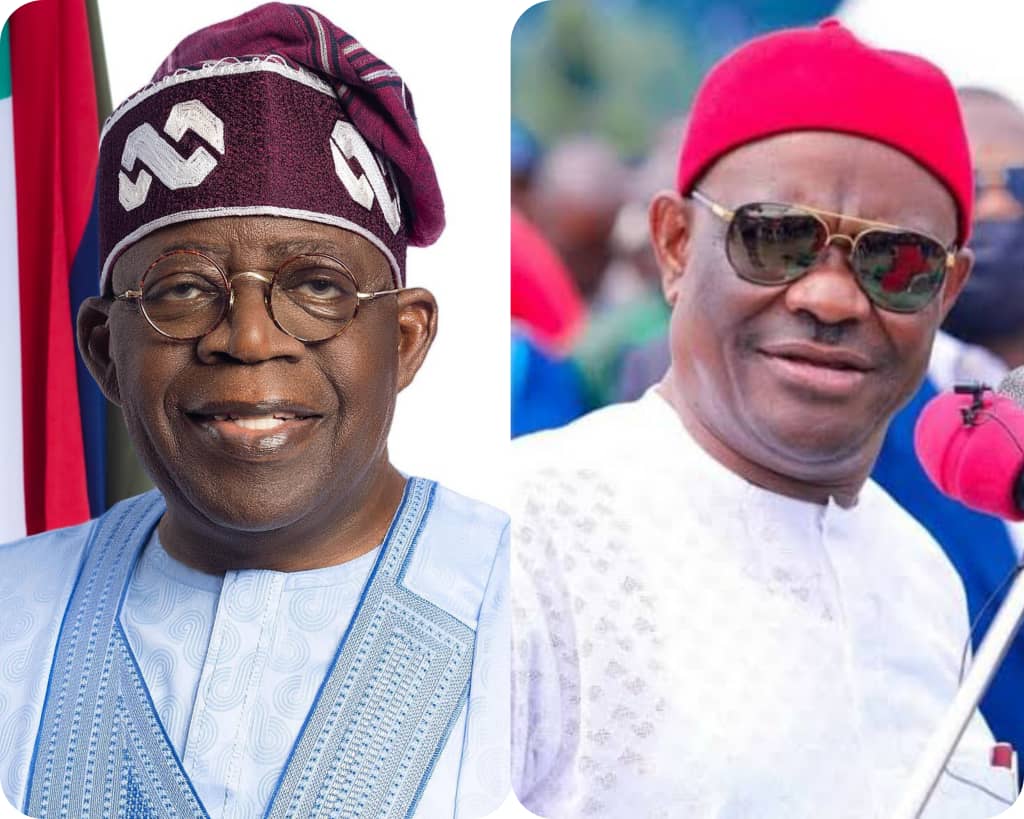
The internal rift within the Peoples Democratic Party (PDP) has widened following fresh declarations by the Minister of the Federal Capital Territory and former Rivers State Governor, Nyesom Wike, openly pledging his support for President Bola Tinubu’s re-election bid in 2027. Despite remaining a PDP member, Wike insists he will actively work to ensure Tinubu secures a second term, a position that has drawn widespread condemnation from within the party and across Nigeria’s political landscape.
Wike’s Justification: Equity and Fairness
Wike attributed his fallout with the PDP leadership to the party’s failure to honour an informal agreement to zone the 2023 presidential ticket to the South. Instead, the ticket went to former Vice President Atiku Abubakar, a northerner, a move Wike said violated the principles of equity, justice, and fairness.
According to Wike, “You can’t have the presidency and the national chairmanship from the North at the same time.” He argued that his opposition to the party’s 2023 candidate was not betrayal, but a principled stand.
Declaring himself a political “asset,” Wike boasted of his role in ensuring victories for his allies in the 2023 elections and reaffirmed his commitment to helping President Tinubu win in 2027.
Backlash from PDP Leadership and Stakeholders
Wike’s comments have provoked a strong backlash from PDP leaders and members, many of whom view his actions as anti-party activities. Calls for his suspension or expulsion have intensified, with party figures accusing him of undermining PDP unity and acting as an agent of the ruling All Progressives Congress (APC).
PDP’s Deputy National Youth Leader, Timothy Osadolor, said Wike no longer wields the influence he once had in the party, describing his outbursts as “reactionary.” Board of Trustees member Chief Bode George condemned Wike’s praise of Tinubu, insisting the PDP will present its own southern candidate in 2027 and will not support a candidate from another party.
Several party spokespersons across states, including Ogun, Jigawa, Bauchi, and Rivers, have labelled Wike’s actions as destructive, warning that the PDP must enforce internal discipline or risk further collapse.
Mixed Reactions from Opposition and Political Observers
Other opposition voices, including those from the NNPP, ADP, and CUPP, accused Wike of working against the opposition coalition, with some calling him a “political hitman” for the APC. They argue that Wike’s dual loyalty has weakened the PDP and eroded public confidence in its ability to challenge the ruling party.
Meanwhile, Wike received support from APC Publicity Director Bala Ibrahim, who defended the minister’s right to support his boss, President Tinubu, stating that loyalty to his current office justifies his political stance.
Some, like former PDP National Secretary Prof. Wale Oladipo, struck a more balanced tone, acknowledging that Wike’s open stance, though controversial, is not without precedent. Oladipo recalled similar betrayals during the 2015 elections and suggested the party should handle the issue through its internal structures.
The Larger Picture: Fragmented Opposition, Frustrated Electorate
The Wike saga underscores a larger issue in Nigerian politics: the fragility of party loyalty and the increasing trend of cross-party allegiances. Critics argue that the PDP’s failure to enforce discipline, and Wike’s continued presence in the party despite openly supporting an APC government, reflect deep structural weaknesses.
Opposition groups insist that 2027 will not be decided by endorsements, but by the realities of hunger, hardship, and discontent among Nigerians. They believe that regardless of Wike’s support, President Tinubu’s performance and the unity of opposition forces will ultimately shape the outcome of the next general elections.
As 2027 draws closer, the question remains: Can the PDP reclaim its relevance and cohesion, or will internal divisions and political opportunism hand the APC an easy victory?
