State governors have initiated a renewed effort to challenge the scheduled release of federal funds to local government councils, aiming to postpone the implementation of the Supreme Court’s ruling on local government autonomy.
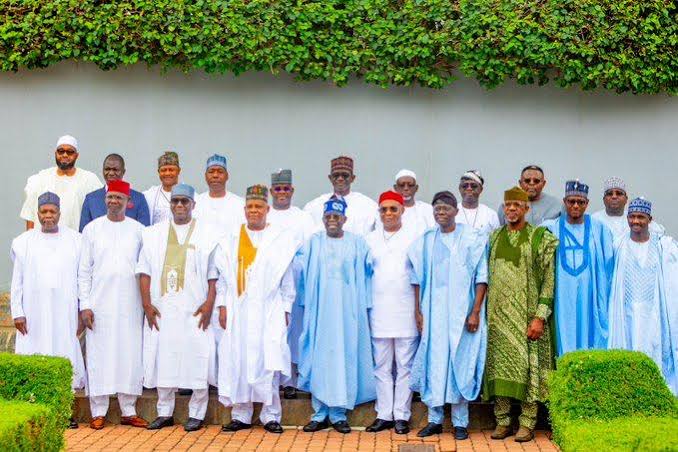
During a recent meeting with President Bola Tinubu in Abuja, some governors expressed their opposition to routing local government allocations through the Central Bank of Nigeria, arguing the necessity to address significant debts allegedly accumulated by the councils.
Presidential aides noted that the governors seized the occasion of the Iftar dinner to advocate for direct payments to the councils, which have been delayed.
According to an insider, “When the governors attended Iftar on Monday, they arranged to meet with the President, which took place on Tuesday afternoon. They had a lengthy discussion with him and departed around six that evening.”
Another official, who spoke on the condition of anonymity, elaborated, “They finally met with the President on Tuesday to seek solutions, as they are vying for a favorable resolution. The Federal Government wants allocations to be processed through the CBN, requiring all local governments to open accounts there. The governors disagree, stating that this setup effectively allows the Federal Government to retain control.”
A source familiar with the discussions revealed that the state leaders preferred to have the funds sent to commercial bank accounts instead. “One governor mentioned that if the CBN manages the account, approval from the Accountant-General would be necessary, keeping it under Federal Government control, which they oppose.”
Following the meeting, the official commented, “They described the meeting as positive, but specifics of any agreement remain unclear. It seems they are collaborating with some officials to navigate the situation, but local government allocations are still on hold.”
Historically, local government funding has been contentious due to the power struggle between state and local governments. On July 11, 2024, the Supreme Court issued a pivotal ruling affirming local governments’ fiscal autonomy nationwide, ordering that federal allocations must be paid directly into the councils’ accounts, bypassing state governments. This decision came after the Federal Government’s suit aimed at enforcing the fiscal autonomy outlined in the amended 1999 Constitution.
The Court deemed it unconstitutional for state governments to control and distribute local government funds and mandated an immediate cessation of the previous indirect payment system. It also stipulated that only democratically elected local government leaders are permitted to receive federal allocations, aiming to curb the practice of appointing caretaker committees by state governors.
Concurrently, the Central Bank of Nigeria has required local councils to complete a two-year audit before disbursements are made, and they have started opening accounts to facilitate direct payments. In February, the CBN began profiling local government chairpersons and signatories to ensure financial autonomy.
Despite these developments, the National Union of Local Government Employees warned the CBN against assisting governors in impeding fiscal autonomy, especially after reports surfaced that the bank delayed opening accounts for certain councils over noncompliance issues.
The Association of Local Governments of Nigeria also noted a lack of formal communication from the CBN regarding the account openings. Concerns over the direct payment process emerged, facing logistical complications even nine months later.
On March 2, 2025, reports indicated that the former Accountant-General of the Federation and the Attorney-General were in discussions about implementing the Supreme Court ruling on local government autonomy but faced challenges in verifying elected officials in councils.
President Tinubu stated on January 1, 2025, that his administration was not in conflict with state governors over local government autonomy, emphasizing the importance of cooperation from all 36 states for grassroots development.
Despite ongoing negotiations, evidence suggests that the Nigerian Governors’ Forum is advocating for a delay in the direct allocation process due to the massive debts attributed to local governments. Mohammed Abubakar, Secretary-General of the Association of Local Governments of Nigeria, noted that these debts were causing complications for the CBN’s implementation of the Supreme Court’s decision.
Abubakar pointed out the risk local governments face of losing funds to creditors as governors are pressuring for local government allocations to be redirected toward settling these liabilities. He stressed the importance of engaging relevant stakeholders to prevent mismanagement of local government funds.
He articulated that transparent communication and detailed guidelines are necessary for local government chairpersons to approach the CBN properly. Abubakar emphasized the need for broader consultations with stakeholders involved in local government affairs to ensure successful implementation of the autonomy regime, advocating for an open process that includes all relevant parties.
